To celebrate the second ever UN International Year of the Volunteer and Te Wiki Tūao ā-Motu – National Volunteer Week, we’re shining the spotlight on a quiet and humble crew – the local volunteers who care for our people and place.
Volunteering is the life blood of any close community – and that’s no different here in Tāhuna Queenstown. Protecting the Whakatipu depends on everyday people. New residents, long-time locals, families, local businesses, and students all play their part – as do many visitors who fall in love with this place and want to leave a legacy for good.
This year National Volunteer Week is from 14–20 June, and the theme is tōu tau ki te tūao – your year to volunteer. To show how simple (and satisfying) it is to give back to our community, we’re sharing four stories of volunteering in Queenstown. Meet a group of different but equally enthusiastic Queenstown volunteers. Get a feel for what their volunteering looks like, and their tips for people thinking about giving volunteering a go.
Volunteering really is for everyone, and you don’t have to live here to take part – there are plenty of ways for Queenstown visitors to give back – even if you’re only here for a few days.
Sophie & Pete are Planting Hundreds of Thousands of Trees
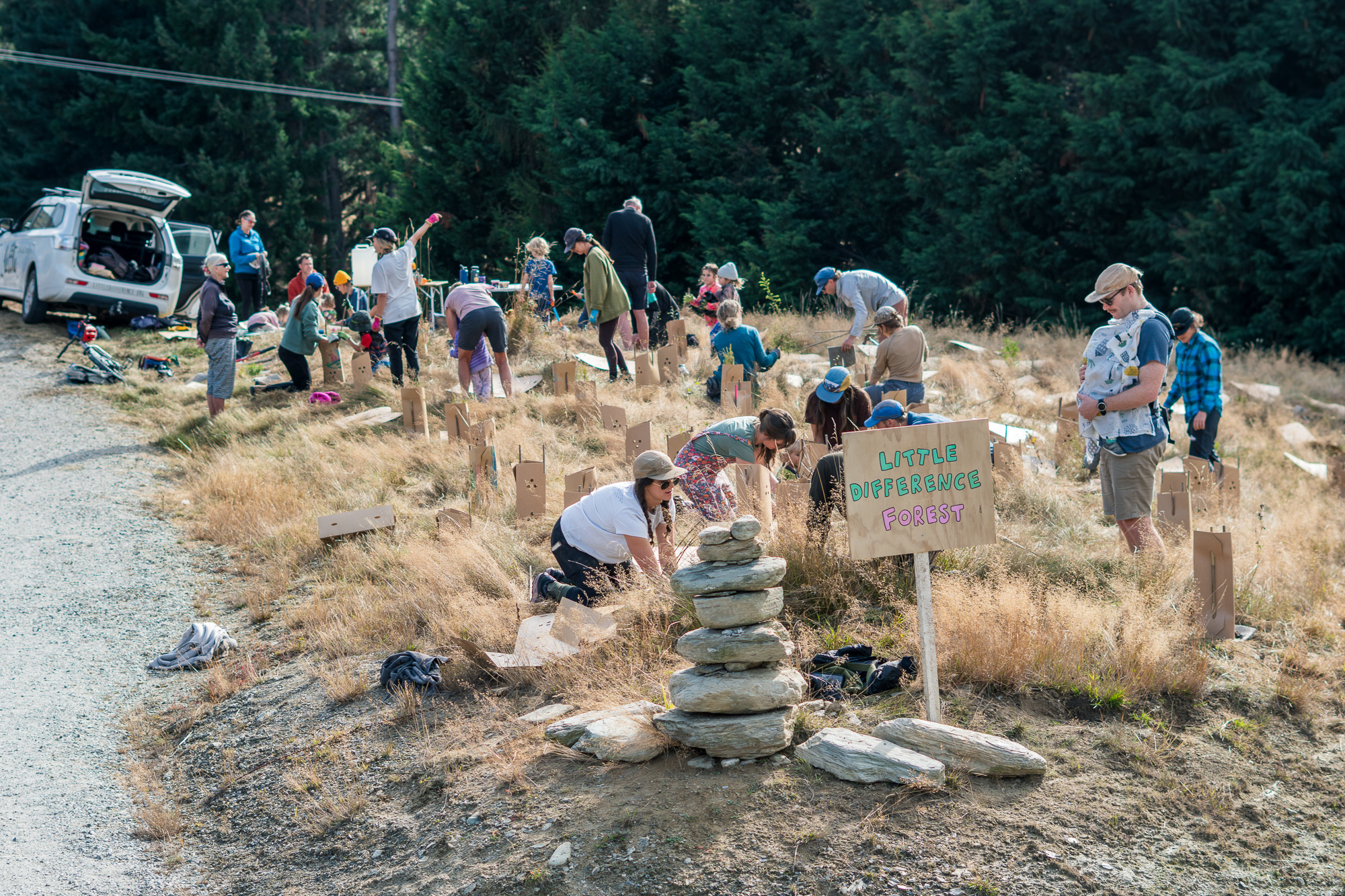
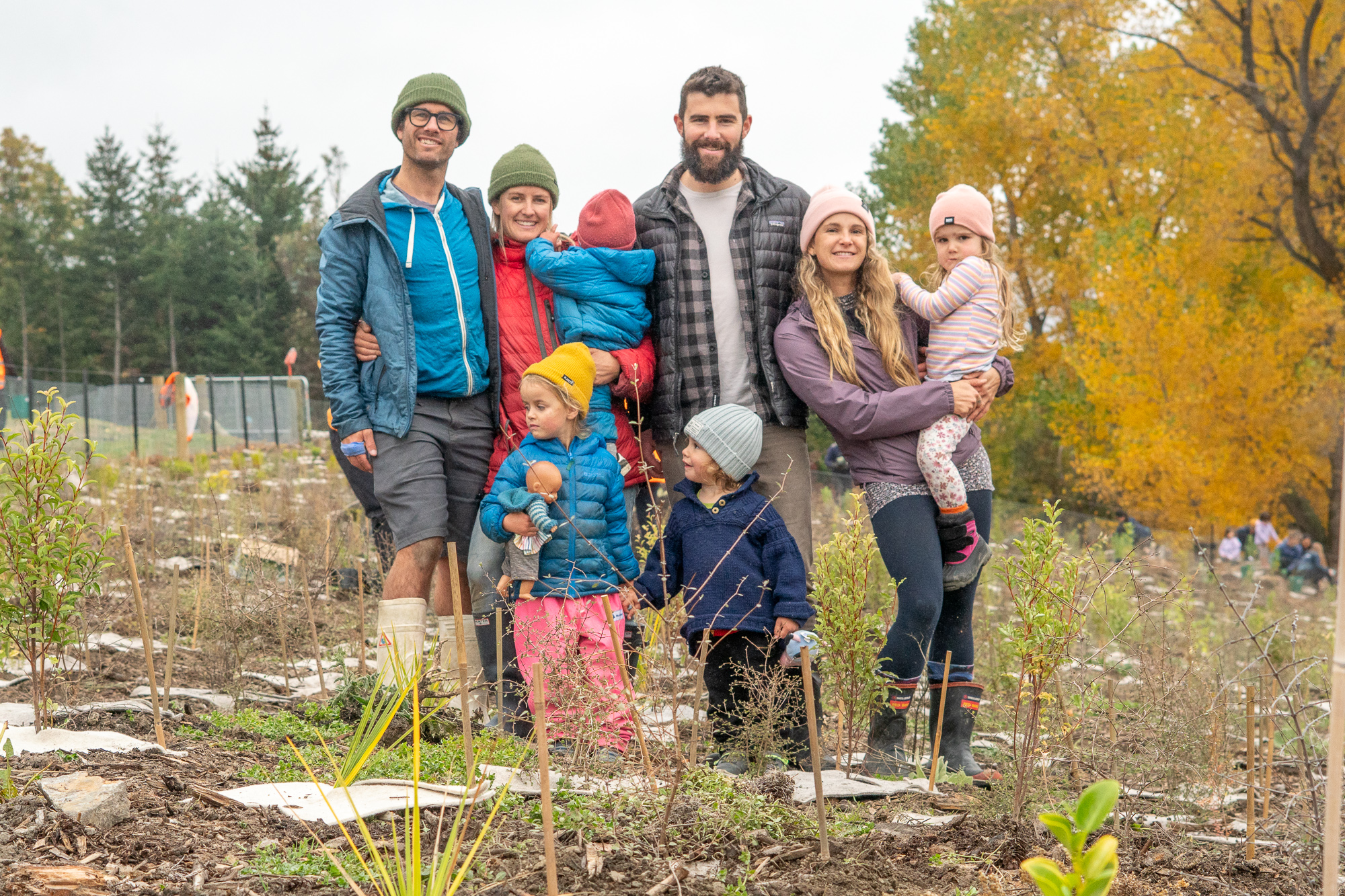
Sophie and Pete Oswald founded Little Difference in 2014, a local greeting card company that plants one tree for every product they sell. They plant in developing countries where they can make the biggest impact to the environment and local people and they’ve planted over a quarter of a million trees so far. The couple also wanted to give back to this community, so they started going to Whakatipu Reforestation Trust planting days, and when they had children, took them along too. In 2025, their involvement with the Trust led to a new initiative.
Pete explains: “I've always wanted to plant my own forest, so we can walk among the trees when we’re 80, but we don’t own any land. However, the new Wharehuanui trail runs past our house, and we noticed where the track doglegs the chunks of land fenced off either side of the trail are quite large. Two big areas near us were being taken over by weeds, and I thought, what if they were planted with trees instead. The landowners and the Trust were supportive, so we got permission to start planting on a hectare of land. We're controlling the weeds and planting the trees. The Trust is providing the plants.”
The first planting day at the new Little Difference Forest took place in April 2026. Sophie says: “We thought we’d be lucky if we got six people but we had 40 people at each day. ”Pete adds: “It's cool because a lot of local families have young kids, it’s brought us all together, and the kids have a blast running around. Connections come out of the planting days, for example recently, a young family looking for a place to live found a home.”
Sophie and Pete have seen first-hand the social impact from their business. Sophie says: “We travelled to our planting site in Madagascar and saw how the projects we support employ local women to plant and care for the forest.” Pete adds: “Rebuilding the ecosystems is building to a point where locals are pushing for ecotourism. People are starting to thrive instead of having to slash and burn to survive.” The couple have seen their work make a difference in Queenstown too. Sophie says: “We've been back to sites we planted five years ago and in that time the trees have grown so much. You really can see the change.”
If you live locally, or you’re visiting Queenstown and want to give back, contributing to native reforestation is a way to leave a legacy that will outlast you. Pete explains: “New Zealand has been isolated from the big continents for 85 million years. It’s one of the most unique ecosystems in the world, and we're at risk of losing it.”
Sophie and Pete recommend joining the Whakatipu Reforestation Trust planting days. Sophie says: “They’re really welcoming - the team will show you how to plant a tree well.” Pete adds: “You can also volunteer to pot plants and germinate seeds at the nursery, which is great if you want to learn how to grow natives, and they do an amazing morning tea!”
Volunteering Connects Sarah with Place & Community
About a year ago Sarah Sieni began volunteering with the Whakatipu Wildlife Trust. Sarah’s been living in Queenstown for six years; however, it’s through conservation volunteering that she’s found a true sense of connection with the community.
Sarah manages 20 traps in the Matakauri wetlands on Gorge Road. She says: “It’s a special place, wetlands are crucial and we’re trying hard to keep them healthy.” Sarah visits the 10.7ha area of wetland every two weeks. It takes her about four hours to circuit the traps, stopping to do a bird count to monitor the bird population on the way. She also helps with the Whakatipu Lizard Project, studying whether reducing mice numbers protects our local lizard population, and a Ben Lomond project monitoring native moths.
Sarah began volunteering with the Trust to connect to this place. “I’m of Pacifika descent and being of service is big in our culture. I love this place, the mauka – mountains –rivers, and lakes, and I've always been a conservationist at heart.” Volunteering for the Trust has deepened Sarah’s relationship with the land. She explains: “The Te Ao Māori worldview is we all live in relationship with everything. We're in relationship with this place and with these taoka – these treasures – the manu – the birds – we’re trying to save. Our work is having an impact, and for me, success also lies in deepening my relationship with the natural world.”
Not everyone agrees with trapping. Sarah has found traps destroyed or removed and makes a plea for people not to interferewith traps, tags, tunnels, or anything with neon tags. She says: “When it comes to the animals we trap, it’s not their fault we consider them pests. We don't celebrate killing. We celebrate the fact there's one less threat to our manu. I had to find the right way to trap, so I've been working on my practice. When I find an animal in my trap, I’ve a ritual. I say a liogi – a prayer – thank the animal for its life and ask for forgiveness.”
Sarah has an appeal for locals and visitors to Queenstown staying longer than a few days. “We’re desperate for boots on the ground. The need is urgent now; we have to trap to protect our native wildlife. So, we need whatever time you can give. The Trust do training. The staff are amazing, you can ask them any questions, and you learn so much.”
New Zealand is so special for native birds because they evolved with no mammal predators. Even if you’re only in town for a few days, Sarah has a beautiful suggestion for a simple way you can help with local conservation. “When you’re out on a walk, use the free e-bird app to do a five-minute bird count where you record all the birds you hear and see. There’s also a great app called Merlin to help you identify native birds.” She also encourages you to protect native wildlife in a way that works for you, whether that’s volunteering in your community, donating to organisations like the Trust, or building your cat a catio to reduce predation risk.
%20(2).png)
Liger Academy Partners with Mana Whenua to Care for Lake Hayes
Liger Leadership Academy is an independent secondary school in Queenstown. Their mission as a school is to develop promising young people into socially conscious entrepreneurs. Part of their educational philosophy is to encourage students to apply what they learn in a real-life context, so they’re involved with many community projects.
Mana Tāhuna is a Kaupapa Māori organisation leading positive change in the Tāhuna Queenstown community. Liger has worked with Mana Tāhuna on a number of projects over several years, and one of the projects they collaborate on is the restoration of Wai Whakaata - Lake Hayes.
Liger Student, Kaja Bradshaw says: “Once a week we join Mana Tāhuna to do water testing, check sediment traps to see what runs into Lake Hayes, and weed stream banks. When I'm older I want to do something environment based, so it's been good to learn about different factors that affect our environment and see how we can have an impact.” Student Lily Espie adds: “It’s interesting learning where the pollution going into Lake Hayes comes from. It's been an unhealthy lake for a while but I didn't know why. Now I know that run off from farms in the area goes into the lake. Mana Tāhuna have installed sediment traps, and they’ve been planting around the streams to filter out dirt and stabilise the banks.”
Liger students also studied the water quality of Lake Hayes. Students tested water samples, identified invertebrates to quantify biodiversity and pollution levels, and mapped out potential pollution sources along with mitigation strategies, before presenting a report. However, Liger’s relationship with Mana Tāhuna is more than environmental. They’ve been learning about Mātauranga Māori – the Māori worldview. Student Nico Farrell says: “Mana Tāhuna integrates Mātauranga Māori with Western science. In Te Ao Māori, water is the lifeblood of the earth, everything needs water to survive. We analysed water quality through Western science principles and tied that back to the Māori concept of being a kaitiaki, a guardian.
The work the students do connects them with their community. Nico says: “We’re integrating impact with community. It's relationship building. I turn up to events and know everyone, and Mana Tāhuna have local youth engaged with their work.” Liger also works with Age Concern, and they’ve been able to connect supporting older local residents with volunteering for Mana Tāhuna. Head of Science at Liger, Dave Kys explains: “A bunch of older people in the region like gardening and being outside but don't get an opportunity to do so often because they don't feel safe doing italone. We’ve suggested they join us when we weed and check pest control traps. Part of the reason I love working here and making learning real, is students start to see we don’t live in isolation. We’re all interwoven.”
The Liger Academy students have a few tips for people keen to get involved with volunteering. Kaja says: “You can volunteer with Mana Tāhuna to help with traps. It’s not hard, you can go for a walk and do a few things on the way. Lily adds: “Community planting days are always really fun because you can go there and make so many connections.”
.jpg)
Ziptrek Ecotours are Restoring Native Forest on Bob’s Peak
Local business, Ziptrek Ecotours combine ziplining with telling stories about the local environment. They’re the pioneers of Queenstown’s eco-tourism scene, Queenstown’s first carbon neutral tour operators, and passionate about regenerating native ecosystems. They’re also repeat attendees at Love Queenstown planting days.
Site Director Mike Higson has been with Ziptrek since they first opened in 2009. Mike says: “Partnering with Love Queenstown makes so much sense because we set up the ziplines as a pathway to teach sustainability. We’re all about regeneration and positive impact, so when Love Queenstown started it was a no brainer to get on board. Volunteering at planting days is great because we’re working within the community, impacting our local area, getting hands on with our local environment. And it's really cool for our team because they can take their kids to the forests they planted. A lot of our team are from overseas, so, if they visit in the future, or family come to stay, they can show where they've made a personal difference.”
Volunteering with Love Queenstown is a natural progression from Ziptrek’s own on-site restoration work. Mike says: “It’s been super cool to see the regeneration of the forest we operate in. Our ziplines run through introduced Douglas-fir forest, but there are pockets of native beech forest. Over the 16 years we've been here, we've removed smaller fir trees and planted to help the beech forest to regenerate. We’ve planted somewhere in the region of 10,000 natives now, and trees that were wee saplings are now well over head height.”
Reforestation is an everyday task for the Ziptrek team. Mike says: “If guides have time between tours, they'll pull out some pesky pines, do some weeding, or plant some new trees. This year, Ziptrek tackles another regeneration project. Mike says: “We're removing a big area of introduced firs under our ziplines. Another couple of thousand natives will go into that area once it's fully cleared – our biggest single tree removal and planting to date.”
Ziptrek’s planting has had a knock-on effect on the diversity of the ecology on Bob’s Peak. Mike says: “We've really noticed bird life increase over the time we've been here. The areas where we've managed to pull out all the Douglas-firs and replace with native flora are especially awesome. We run a trapping network as well, because there's lots of possums, stoats, and rats in the forest, so that's helped.”
Mike’s a big fan of giving back when you travel. He says: “If you can engage with the communities you visit, have a lasting impact, and leave a bit of yourself, it rounds out the whole experience. The simple way is donating money but you don't have to dip into your pocket – you can also donate time. There's a lot of planting days happening, and other ways you can get involved with local organisations and charities as a volunteer. We also run a programme where you can fund a native tree when you book a tour and we’ll plant it for you."
.jpg)
Organisations you can Volunteer with in Queenstown
Here’s a quick round up of organisations doing great things for Queenstown’s community and environment. Some, you’ve met already through the stories of our Queenstown volunteers. These organisations are always looking for support. Please give your time, your skills, your money, or help spread the word.
Whakatipu Reforestation Trust
The Whakatipu Reforestation Trust protects and restores the native biodiversity of the Whakatipu Basin. They’ve planted over 140,000 native trees, shrubs, and grasses throughout the region to date. You can volunteer weekly at their community nursery where they grow native plants from eco-sourced seed or attend one of their regular community planting days in spring and autumn. Whether you live in the Queenstown-Lakes area or you’re visiting for a short time, no experience is necessary. You can get involved here.
Whakatipu Wildlife Trust
The Whakatipu Wildlife Trust’s mission is to create and maintain a predator free environment in our region to enable birds and other native wildlife to flourish. The Trust run free monthly trap training sessions for new volunteers, and there are over 70 community trapping groups throughout the region. Volunteers also have the chance to support the Trust’s other work: monitoring birds and tracking the populations of local moths and lizards. Complete their volunteer form, or visit their website to learn more about how to become a volunteer.
Mana Tāhuna
Mana Tāhuna Charitable Trust is a kaupapa Māori organisation whose way of operating is rooted in Māori cultural values and Te Ao Māori – the Māori worldview. Mana Tāhuna works with the local community to improve the wellbeing of whānau – local people – and the health of our Taiao – natural world.
Mana Tāhuna’s major environmental project is the restoration of Te Wai Whakaata - Lake Hayes, where they’ve been working since 2020 with local landowners, businesses, schools and community members to improve the health of the land, restore native species, and improve water quality. You can contact them to kōrero about ways to support their regeneration projects by weeding, planting, trapping, and other tasks.
Southern Lakes Sanctuary
Southern Lakes Sanctuary is a landscape-scale conservation organisation that works with over 80 community trapping groups, landowners, and businesses. They coordinate predator control over 850,000 hectares. The Sanctuary crew is currently ramping up predator control in seven critical locations and connecting these sites with ecological corridors to create a network of safe predator-controlled space across the region.
You can join a local trapping group, log a takahē sighting, start backyard trapping to help protect native wildlife from your own backyard, or donate to your local group to help fund tools, traps, and resources for those doing the mahi on the ground.
Love Queenstown planting days
Love Queenstown is a community fund that exists to accelerate grassroots environmental action. We raise and invest funds in partnership with the local tourism industry to support this place and the lives of the local community. 100% of funding is allocated locally.
We also run annual planting days in spring where the local community and businesses come together to plant thousands of native trees in key locations through the district. If you’re in town in spring, come along.

Check out the Love Queenstown Volunteer Calendar to start volunteering in Queenstown
Love Queenstown plays host to a community volunteer calendar where you can find out more about local volunteer events and local organisations needing your support.
We hope the diversity of these Queenstown volunteer stories inspire you. No matter who you are, no matter how much (or how little) time you have, there will always be something you can do. Everyone is welcome and everyone is needed.

